

You don’t need to be a writer to start journaling. Just a pen, a few minutes, and honesty. Journaling has been proven to improve focus, reduce stress, and even enhance your emotional well-being. With such powerful benefits, it’s no wonder more people are learning how to start journaling. This guide will show you exactly how to begin your journey clearly and simply so you can make it a consistent habit.
Whether you’re looking to gain clarity, relieve anxiety, or track personal growth, journaling could be your best next step.
Why Journaling Works: The Science behind the Habit
Journaling is more than a diary. It’s a mental detox. Writing down your thoughts helps organize your mind, process emotions, and sharpen self-awareness. Studies show it supports mental health, reduces anxiety, and increases mindfulness.
And best of all? It’s free. All you need is consistency.
Digital vs. Paper Journals: Which One Is Right for You?
Your journaling experience begins with choosing your format. Here’s a quick comparison to help you decide:
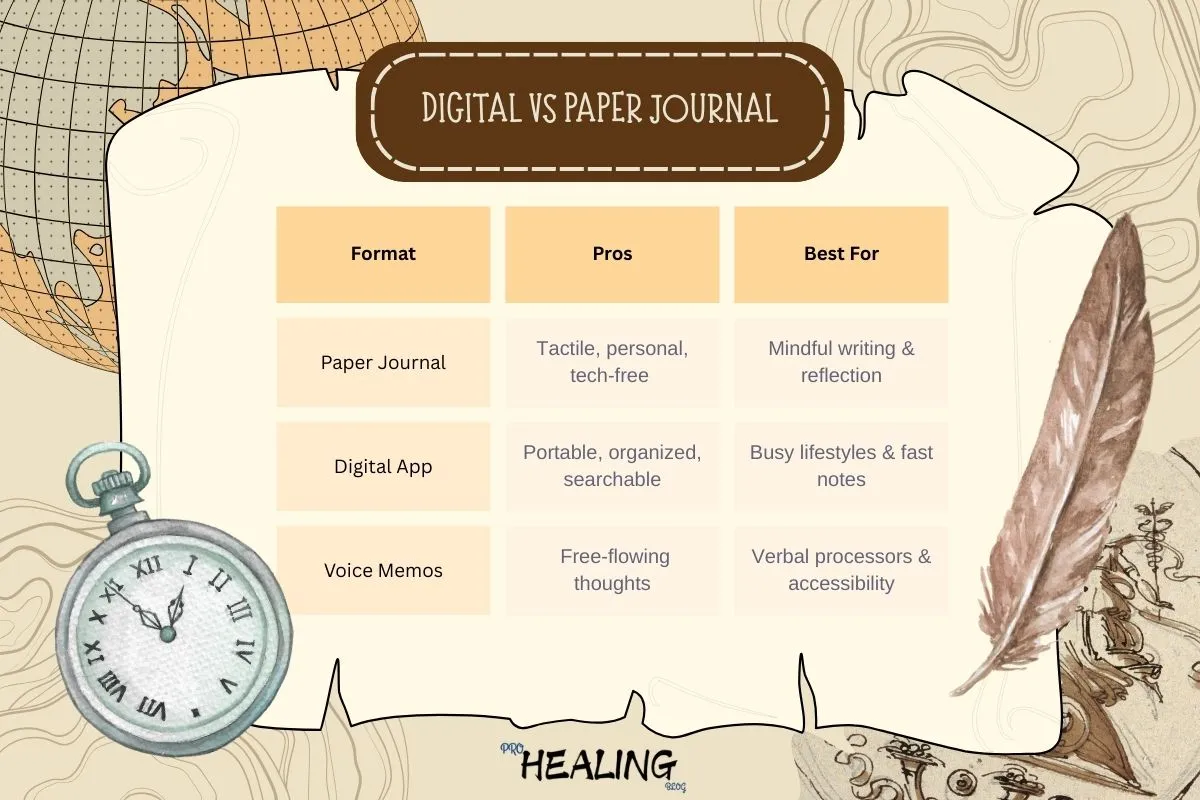
Try both and see which helps you stay more consistent.
Best Time to Journal: Find Your Flow Moment
There’s no magic time to journal. Morning clears your head. Evenings offer reflection. The goal? Consistency. Start with just 5 minutes a day. Tie it to habits like coffee, brushing teeth, or bedtime. That’s how habits stick.
Journal Prompts That Actually Work (Especially for Beginners)
Feel stuck staring at a blank page? Prompts are a beginner’s best friend. These spark thoughts and ease you in:
- What am I feeling right now and why?
- One thing I want to let go of is…
- What made me smile today?
- A moment that challenged me today was…
No pressure. Just pick one and write freely.
Set a Clear Journaling Goal: What Do You Want to Gain?
Why are you journaling? Defining your major purpose of writing helps you stay focused. Your goal might be to:
- Get rid of anxiety
- Help building your self-awareness
- track your daily progress
- Have more efficient emotional regulation
Write your goal on the first page of your journal. And also revisit it often.
Let Go of Perfection: Just Start Writing
This isn’t your English class. There are no grades or judgments. No need to worry about spelling, grammar, or structure. Let your words flow.
Start with “Today I feel…” and see where it takes you. Overthinking is the only thing to avoid.
Journaling in 5 Minutes: The Quick & Powerful “Three Things” Method
Short on time? Use this journaling hack daily:
- One thing you’re grateful for — even something small that made you smile today
- One thing you’re proud of — an effort you made or a moment you handled well
- One thing you’re looking forward to — something positive waiting for you tomorrow
Done in 5 minutes. Yet it rewires your brain for positivity.
Turn Journaling into a Ritual You Look Forward To
Create a vibe. Brew the tea, play some soft music and light a candle. Rituals can shift journaling into self-care because its not a chore. The environment around you while writing affects how you feel during that time.
Your journal becomes your private sanctuary.
Reviewing Past Entries: Learn, Reflect, Grow
Revisit your old journal entries once in a month. Look for:
- Progress you’ve made so far
- Recurring feelings or emotional cycles
- Goals you’ve reached till now
- Mindset shifts over time
This self-reflection deepens self-awareness and keeps you motivated.
Real Journal Entry Example for Beginners
Need inspiration? Here’s a simple, real-life beginner example:
“I’m overwhelmed today. Work was too much. But I’m proud I didn’t shut down. I kept going. Also, my dog did something goofy—made me laugh when I needed it most. I’m okay, even if I’m tired.”
Simple. Honest. And healing.
How to Start Journaling for Mental Health: Calm Your Mind in Minutes
Journaling for mental health is a proven tool. Use it to:
- Track mood swings
- Release negative thoughts
- Identify anxiety triggers
- Practice basic techniques
Try to write one page a day when you feel exhausted. It helps offload your mental weight.
Journaling for Self-Improvement: Track Habits, Progress & Wins
Use journaling for self-improvement to become the best version of yourself:
- Set weekly goals
- Log habits
- Reflect on challenges
- Celebrate growth
End each week by writing: “What did I learn? What will I do better?”
Journaling for Inner Balance: Create Peace through Pen
Chaos outside? Journaling brings balance inside. Use it to:
- Center your thoughts
- Practice mindfulness
- Define your values
- Reconnect with what matters
Your journal becomes your grounding tool.
Journaling to Relieve Anxiety: A Safe Space for Your Worries
Use the brain-dump method where you have to write down every anxious thought, unfiltered. It clears the mental noise. Then, follow up with one calming action or a gratitude statement. Writing helps you breathe easier.
Example of How to Start a Journal Entry Today
Date: December 31, 2025
Mood: Hopeful, happy or curious
It’s my first journal entry. I’m not sure what I’ll say, but I want to feel more in control of my thoughts. I want clarity. One small win today: I wrote this entry. That’s a start.
Conclusion: Start Small, Stay Honest & Keep Going
The magic of journaling isn’t in perfect words—it’s in the act of showing up for yourself. Don’t wait for the right time or mood. Just start. Every word you write builds a stronger, more self-aware, more grounded version of you. Grab your pen. Open your heart. Begin your story.
Also read https://prohealingblog.com/daily-meditations/ for mental health and calmness.
FAQs
How do beginners start journaling?
Start with short sessions. Choose a quiet moment. Use simple prompts. Write freely. No rules, just be honest.
What is the 3 3 3 method of journaling?
List 3 things you’re grateful for, 3 things to improve, and 3 goals. Fast, focused, and powerful.
What to write when you start journaling?
Begin with what you’re feeling or thinking. Use prompts like “Today I feel…” or “What do I want to remember today?”
What is the 5 minute journal method?
A structured format: 3 morning gratitudes, 1 intention, 1 affirmation, then 3 nightly wins and 1 lesson learned.




Really helpful. Thanks Alot!!!!
I love how you explained that journaling doesn’t have to be perfect. That mindset shift alone is incredibly helpful for beginners.
This article made journaling feel so simple and approachable. I’ve always overthought it, but now I feel confident enough to start today.