


In a world that’s rushing after synthetic solutions, the green world quietly has its age-old secrets. Medicinal plants are the silent warriors of nature that offer healing without their severe side effects. With roots in early traditions and supported by modern science, healing herbs are more applicable nowadays than ever before.
World Health Organization reports that over 80% of the global population is still dependent on traditional plant-based medicines. As chronic illnesses are rising around the globe, shifting towards natural remedies isn’t just a passing trend, it’s a requirement.
So let’s explore this lush and leafy world with me and discover how medicinal plants can boost your health in a way that feels natural and effective.
What Are Medicinal Plants?
Medicinal plants are the plants that contains natural compounds with therapeutic properties. Used from centuries across various cultures, these plants can treat, prevent, or mitigate health issues. From soothing chamomile to immune-boosting tulsi, their impact is real, practical, and widely experienced.
They often function through bioactive compounds such as alkaloids, flavonoids, and essential oils. These substances interact with the human body to support healing effects, usually with fewer side effects than synthetic drugs.
Understanding the Role of Medicinal Plants
Medicinal plants aren’t just old folk stories passed down the generations. They serve critical roles in health and healing in ways that can’t be replaced alone by modern medicine.
- Accessible Healthcare: Specifically in rural or under-developed areas with limited medical facilities
- Cultural Significance: Central to traditions, rituals and ancestral knowledge
- Low Cost: Usually more affordable than pharmaceuticals
- Preventive Care: Commonly utilized to support immunity and overall health
- Chronic Disease Relief: Helps cope up conditions like arthritis or diabetes
- Sustainability: Renewable, with less environmental effect
- Versatile Use: Used in preparation of teas, poultices and oils etc.
- Fewer Side Effects: When used appropriately and responsibly
- Scientific Use: Foundation of many modern medicines we rely on today
- Personal Empowerment: Encourages self-care and body awareness
This balance between tradition and science is what makes medicinal plants so influential. They don’t replace modern medicine; but they certainly complement it in several meaningful ways.
Top 10 Medicinal Plants and Their Uses
Let’s explore some everyday heroes from the plant kingdom:
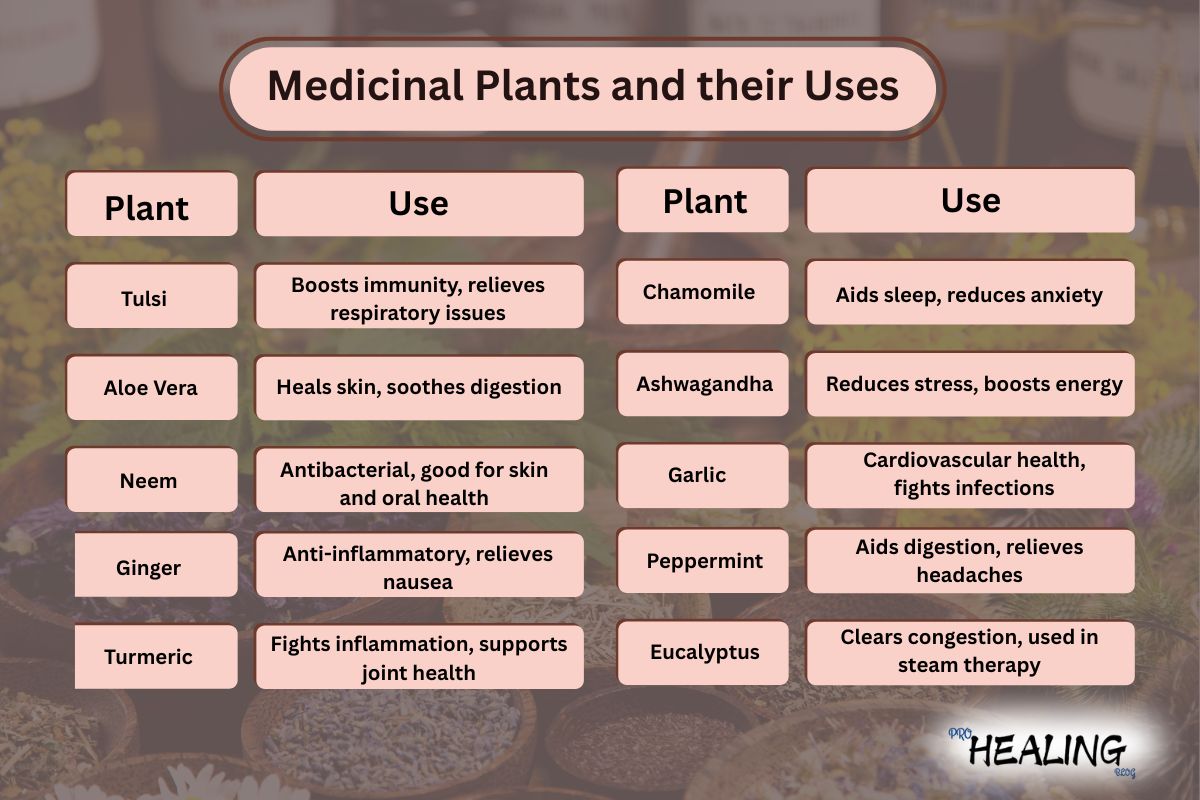
Quick Home Remedies Using Medicinal Herbs
Here are a few simple remedies that helps in our daily routines. These are practical and gentle on the body.
- Aloe Vera gel to soothe minor burns and help reduce acne growth
- Tulsi tea to ease cold and flu related symptoms
- Turmeric milk to lessen inflammation and support its rapid recovery
- Ginger lemon and honey shot to boost digestive system of body
- Neem water rinse for dandruff control and scalp health maintenance.
These remedies are easy to use, impactful and backed by both tradition and modern science.
Medicinal Plants and their Health Benefits
For easy reference, here’s a medicinal plants chart listing 10 commonly used herbs:
| Medicinal Plant | Health Benefit |
| Cinnamon | Controls blood sugar |
| Fenugreek | Aids lactation |
| Lavender | Reduces stress |
| Fennel | Improves digestion |
| Gotu Kola | Boosts brain function |
| Moringa | Nutrient-rich superfood |
| Licorice | Soothes sore throats |
| Sage | Improves memory |
| Rosemary | Boosts circulation |
| Lemon Balm | Calms the nervous system |
A Modern Take on Traditional Healing
Modern research is catching up with what ancient healers already had knowledge about. A 2023 review that was published in Current Biology identified more than 200 phytochemicals with strong therapeutic potential. These compounds include antioxidants, antimicrobial agent and substances with anti-cancer properties.
What’s even more interesting is how modern technology is evolving day by day. Nanotechnology is nowadays used to enhance the delivery of medicinal plant extracts that helps the body to absorb them more efficiently. The result? Treatments that are not only rooted in nature but enriched by science; making them safer, smarter, and more effective than ever before.
How to Grow Your Own Medicinal Plants
You don’t need a forest. Just a sunny balcony or a small kitchen garden is enough for growing medicinal plants. Its simplicity and accessibility makes it more beautiful.
- Start with growing easy plants such as mint, tulsi and aloe vera.
- Use organic soil and avoid using chemical pesticides
- Harvest carefully and avoid over-plucking leaves
- Dry herbs properly and store them in airtight jars.
Gardening does more than just supporting your health. It calms down the mind, reconnects you with nature, and perhaps most importantly puts a sense of control back in your hands. It’s not just therapeutic. It’s empowering.
Medicinal Plants for Immune Support
Immune-boosting herbs include:
- Tulsi – antiviral and antibacterial
- Ginger – improves circulation
- Amla – packed with Vitamin C
- Echinacea – known to reduce cold duration
These herbs help the body build resilience without overstimulating the immune system.
Conclusion: Nature’s Pharmacy Is Right Outside
In a fast-paced world driven by pills and prescriptions, medicinal plants gently remind us that true healing can be simple, green, and grounded in nature. Whether you’re sipping on calming chamomile or using turmeric in your cooking, you’re part of a timeless tradition of wellness.
So next time you pass a leafy bush or a flowering herb, take a moment. That might just be your next remedy.
Also read: Healing Herbs and Medicinal Plants List: Nature’s Remedies
FAQs
What are the top 5 medicinal plants?
Some of the most powerful and widely used ones include Tulsi, Aloe Vera, Neem, Ginger, and Turmeric.
What are the 10 uses of medicinal plants?
They boost immunity, soothe digestion, support mental health, reduce inflammation, aid in skincare, enhance sleep, relieve pain, balance hormones, detoxify the body, and help manage chronic conditions.
What are medicinal plants?
They are plants containing compounds that have therapeutic properties and are used to treat or prevent health conditions.
Is a medicinal plant answer?
Yes, in many cases. Medicinal plants offer natural, sustainable, and often safer alternatives to conventional medicines, especially for minor ailments.